IT Services and Consulting for Growing Businesses
Technology plays a central role in how modern businesses operate, communicate and grow. At Kaze Digital, we provide IT services and consulting that help businesses make informed technology decisions, improve their IT environment and plan for long-term growth.
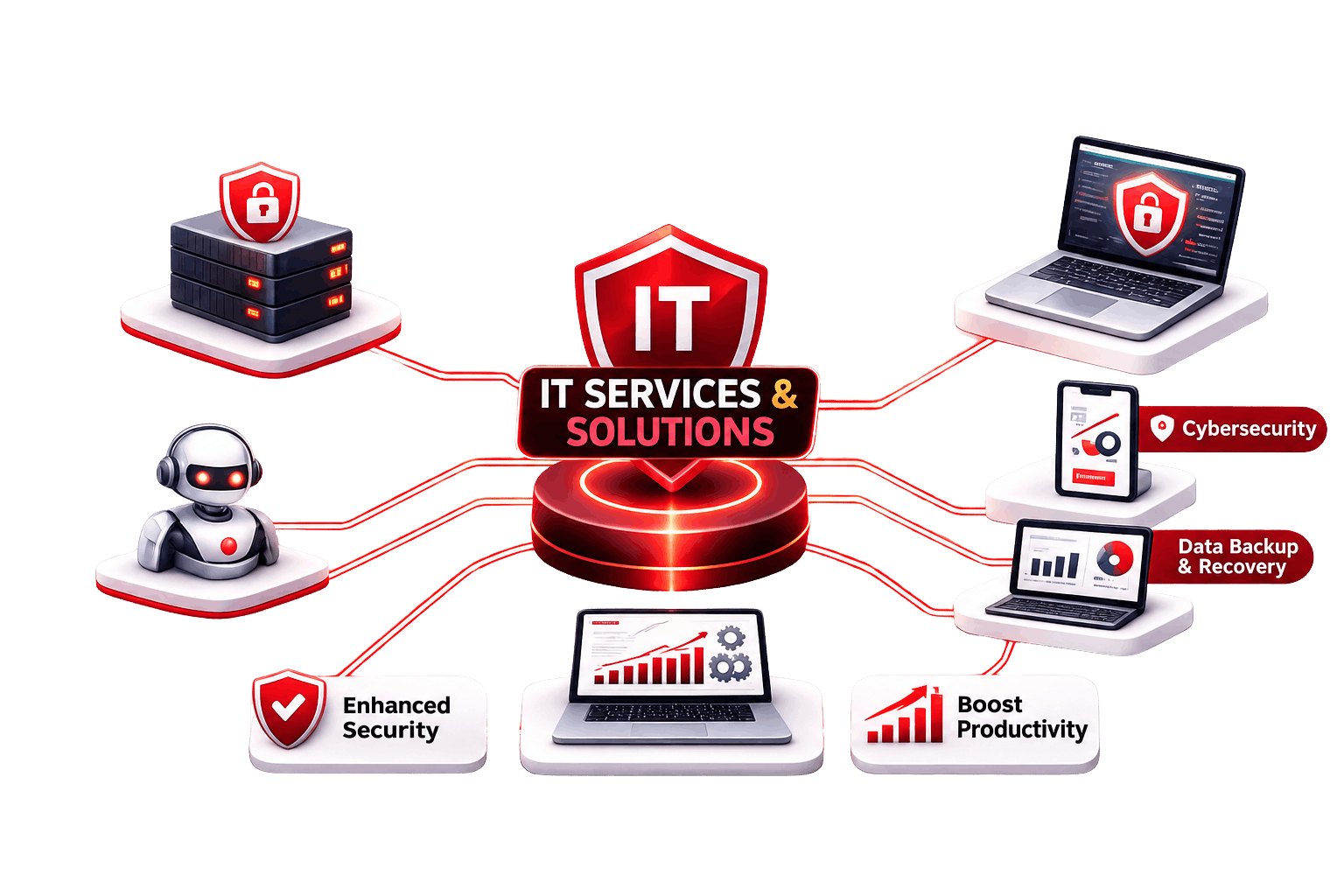
Strategic IT Services Built Around Your Business
As technology becomes more complex, businesses need more than individual solutions to keep their systems effective. From assessing your current IT environment to planning cloud migration, improving business continuity or preparing for digital transformation, the right technology strategy can help you move forward with greater confidence.
Our approach combines strategic guidance with practical technology expertise, helping you understand where your business is today and where your technology needs to go next. Whether you need experienced IT leadership, an independent assessment or support with wider technology planning, we help you create a clearer path forward. Our IT services and consulting solutions are designed to support businesses at different stages of their technology journey, from improving existing systems to planning for future growth and transformation.

IT Services We Provide
Fractional IT Director Services
Gain access to experienced technology leadership without the cost of a full-time executive. Fractional IT Director services help align IT strategy with business objectives, support informed decision-making, oversee technology initiatives and guide long-term digital planning.
IT Assessment Services
An IT assessment reviews your existing technology environment to identify risks, inefficiencies and opportunities for improvement. It provides clear recommendations that help strengthen infrastructure, improve performance, reduce costs and support future business growth.
Virtual CIO Services
Virtual CIO services provide strategic technology guidance for businesses that need experienced leadership without hiring a permanent executive. From IT planning and budgeting to digital transformation, they help ensure technology supports long-term business success.
Cloud Migration Services
Cloud migration services help businesses move applications, systems and data securely with minimal disruption. Careful planning, risk management and migration support ensure improved scalability, flexibility and performance while maintaining business continuity throughout the transition.
Backup and Disaster Recovery
Backup and disaster recovery services help protect critical business data from unexpected loss, cyber threats and system failures. Reliable recovery planning ensures essential information can be restored quickly, reducing downtime and supporting business continuity.
MSP Management
MSP management services help businesses oversee managed service providers, monitor service quality and ensure technology partners meet agreed expectations. Effective management improves accountability, optimises IT performance and keeps outsourced services aligned with business objectives.
Why Businesses Need a Proactive Approach to IT
Waiting until something goes wrong can make technology problems more disruptive and expensive to resolve. A proactive approach focuses on identifying potential issues and opportunities before they become larger challenges.
Reduce Disruption
Regularly reviewing your IT environment can help identify potential problems before they affect day-to-day operations.
Improve Security
Ongoing assessment and planning can help businesses identify vulnerabilities and strengthen their approach to technology security.
Plan for Growth
Technology should be able to evolve alongside your organisation rather than becoming a limitation as your business expands.
Make Better Technology Investments
A proactive strategy helps businesses prioritise technology spending based on actual requirements and long-term value.
Strengthen Business Continuity
Preparing for potential disruptions can help businesses respond more effectively when unexpected technology issues occur.
The Role of IT in Digital Transformation
Digital transformation is changing how businesses operate, deliver services and interact with customers. But successful transformation requires more than adopting new tools. It requires understanding how technology can improve the underlying processes and systems that support the organisation.
The key is to identify where technology can create meaningful improvements rather than adopting new solutions simply because they are available. A structured digital transformation strategy helps businesses prioritise opportunities and introduce change in a way that supports their operational goals.

IT Consulting Services
Technology decisions can have long-term implications for a business. The right consulting approach can help organisations understand their options, prioritise investments and develop strategies that support both immediate requirements and future growth.

IT Strategy Consulting
A clear IT strategy connects technology decisions with business priorities. Rather than making isolated technology investments, businesses can develop a structured roadmap that considers current capabilities, future requirements and long-term objectives. IT strategy consulting can help identify technology priorities, assess gaps and establish a clearer direction for future IT investments.

Microsoft 365 Consulting
Microsoft 365 provides businesses with a broad range of tools for communication, collaboration and productivity. However, getting the most from the platform requires thoughtful configuration and planning. Microsoft 365 consulting services by kaze digital can help businesses review their current environment, improve how tools are used and develop a more effective approach to collaboration and productivity.

Digital Transformation Consulting
Digital transformation involves more than introducing new technology. It is about improving how a business operates by using technology to modernise processes and create better ways of working. Digital transformation consulting can help identify opportunities for improvement, evaluate new technologies and develop a practical roadmap for modern operations.
What to Look for in an IT Consulting Partner
Choosing an IT consulting partner is about more than finding someone with technical knowledge. The right partner should understand how technology connects with your business and be able to communicate recommendations clearly.
Strategic Thinking
Your IT partner should understand your broader business objectives and help connect technology decisions to them.
Relevant Expertise
Look for experience with the types of systems, technologies and challenges relevant to your organisation.
Proactive Recommendations
A strong technology partner should help identify potential risks and opportunities rather than simply respond when problems occur.
Scalable Solutions
Technology recommendations should consider both your current requirements and how your business may develop in the future.
Clear Communication
Complex technology decisions should be explained in a straightforward way, helping business leaders understand their options and make informed decisions.
Why Choose Kaze Digital for IT Services?
Technology decisions can have a lasting impact on your organisation. At Kaze Digital, we focus on understanding the wider business context behind each technology challenge rather than approaching IT as a collection of isolated systems.
Our approach combines strategic thinking with practical technology guidance, helping businesses make decisions with greater confidence.
Experienced IT Leadership
Our services provide access to strategic technology expertise when you need additional guidance or leadership.
Practical Solutions
We focus on recommendations that are realistic, relevant and appropriate for your business environment.
Scalable Technology Planning
We consider how your technology requirements may evolve as your organisation grows and changes.
Long-Term Perspective
Rather than focusing only on immediate issues, we help businesses think about the wider role technology should play in their future.
Our Approach to IT Consulting
Effective IT consulting starts with understanding the bigger picture. Our approach is designed to help businesses move from uncertainty to a clearer technology direction.
Understand
We begin by learning about your business, objectives, existing technology environment and current challenges. This helps us understand the context behind your technology requirements.
Assess
We evaluate the relevant systems, infrastructure and processes to identify potential risks, gaps and opportunities for improvement.

Strategise
Based on our findings, we help develop practical recommendations and technology strategies that align with your business priorities.
Support
Technology needs can change over time. We provide ongoing guidance to help businesses navigate new requirements, evaluate opportunities and make informed technology decisions as they evolve.
Ready to Build a Smarter IT Strategy?
Let's discuss your IT requirements and explore how technology can better support your business.
FAQ's
Frequently Asked Questions
IT consulting typically focuses on strategic advice, planning and technology decisions, while IT support is generally concerned with resolving technical issues and maintaining day-to-day operations. Businesses may use one or both depending on their requirements.
A business may benefit from a Virtual CIO when it needs experienced technology leadership but does not require or want to hire a full-time CIO. This can be particularly useful when planning major technology changes or developing a long-term IT strategy.
A Fractional IT Director provides strategic IT leadership on a part-time or flexible basis. They can help businesses establish priorities, oversee technology decisions and align IT with wider organisational objectives.
An IT assessment can provide greater visibility into your existing technology environment. It may help identify security risks, outdated systems, inefficiencies and areas where technology improvements could benefit the business.
A clear IT strategy helps ensure that technology investments are aligned with business priorities. It can help organisations plan for growth, prioritise improvements and avoid making disconnected technology decisions.
Businesses should consider their existing systems, data requirements, security, compliance responsibilities, operational needs and long-term objectives. A well-planned migration should be based on these factors rather than simply moving everything to the cloud.
IT consulting can help businesses understand where technology could improve existing processes and operations. It can also help identify priorities, evaluate potential solutions and develop a structured roadmap for introducing change.
Yes. Smaller businesses may not have dedicated internal IT leadership but still face important technology decisions. IT consulting can provide access to strategic expertise when planning growth, improving systems or addressing technology challenges.
